
If current liabilities are bigger than current assets, working capital is negative. Many owners panic when they see that minus sign, and sometimes they should. But for a surprising number of businesses it is simply how the model works, and a few of the best-run companies in the world have operated this way on purpose.
The trick is to understand why the number is negative. This guide walks through the two very different stories that can sit behind the same figure.
How working capital ends up below zero
Working capital is current assets minus current liabilities, as explained in our formula guide. It turns negative when short-term obligations outweigh short-term resources. That can happen in only a handful of ways:
- Customers pay you before you have delivered (deposits, subscriptions, gift cards, tickets), which creates a liability called deferred revenue.
- Customers pay you immediately while you pay suppliers weeks later, so payables are large relative to receivables.
- Stock turns over so fast that inventory never builds up.
- Or, less happily, you have borrowed short-term, fallen behind on bills, or used short-term money to buy long-term assets.
The first three describe a business whose customers and suppliers are, in effect, financing its operations. The fourth describes a business that is running out of room.
The healthy version: a café
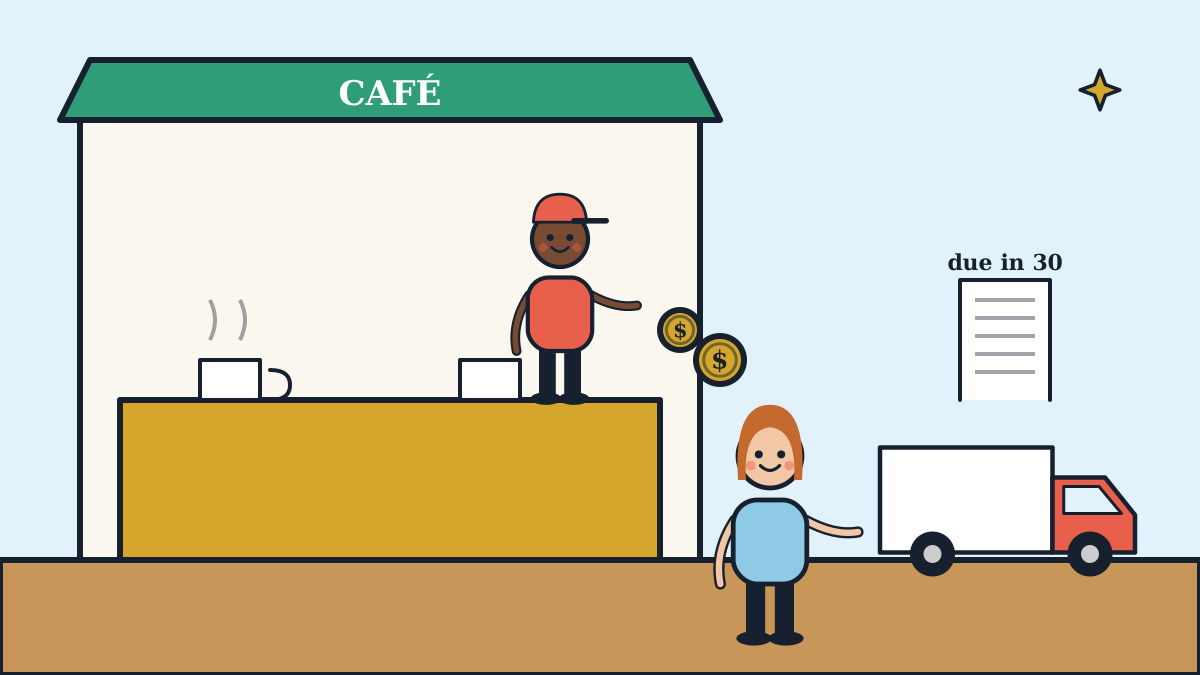
Picture a neighbourhood café. Customers pay at the till, by card or cash, the moment they order. Milk, bread and pastries are delivered several times a week and invoiced on 14- or 30-day terms. Coffee beans arrive monthly on 30-day terms. Inventory is small because most of it is perishable and used within days.
At any month-end the café holds a modest bank balance, almost no receivables, a few days of stock, and a stack of supplier invoices not yet due, plus accrued wages and sales tax it has collected but not yet paid over. Current liabilities comfortably exceed current assets. Yet the café is not in trouble: every day, more cash comes in from customers than goes out, and the timing works in its favour.
Subscription businesses show the same pattern for a different reason. A customer who pays for a year up front hands over twelve months of cash on day one, but the business records most of it as deferred revenue, a liability, because it still owes eleven months of service. The faster such a business grows, the more negative its working capital tends to become, and the more cash it has to hand.
The dangerous version: a contractor
Now picture a small building contractor. It invoices clients on 30-day terms but many pay in 60. To keep jobs moving it has let supplier bills slip past their due dates, drawn its overdraft to the limit, and put payroll taxes on a payment plan. It recently bought a van using the overdraft rather than a proper vehicle loan.
This business may also show negative working capital, but every part of the story is pointing the wrong way. The liabilities are not generous terms freely offered; they are overdue obligations and short-term debt. The cash is not arriving before costs; it is arriving well after them. One bad month and a supplier could stop deliveries or a lender could freeze the facility.
| Signal | Healthy negative | Warning negative |
|---|---|---|
| Where the liabilities come from | Deferred revenue, supplier invoices within terms | Overdue bills, maxed overdraft, tax arrears |
| Customer payment timing | At purchase or in advance | Slow, after delivery, often late |
| Trend as sales grow | Cash balance rises | Cash balance falls |
| Supplier relationship | Paid on the due date, terms stable | Chasing calls, stop-supply threats, shorter terms |
| Use of short-term money | Funding day-to-day trading | Funding losses or long-term purchases |
| Weekly cash forecast | Stays above a safe minimum | Dips below zero in the coming weeks |
A five-question self-check
- Are any supplier invoices, tax payments or loan instalments past their due date?
- If sales dropped by a fifth for two months, would customer receipts still cover the bills falling due?
- Is any overdraft or credit line close to its limit, or has it been fully drawn for months?
- Has anything long-lived (vehicles, equipment, fit-out) been paid for from short-term borrowing?
- Does your 13-week cash forecast stay above your minimum balance every week?
If you answered "no" to the first four and "yes" to the last, negative working capital is probably a feature of your model. If several answers point the other way, it is time to act: talk to your accountant, prioritise the obligations with the harshest consequences (payroll and tax typically come first), and speak to suppliers and lenders early rather than late.
The hidden risk even in healthy negatives
A business that runs on customer prepayments depends on sales continuing. If demand drops, the cushion unwinds quickly: new deposits stop arriving, but the obligations to deliver on old ones remain, and supplier invoices still fall due. Gift card and voucher balances can behave the same way. Businesses in this position often keep a cash reserve larger than their working capital figure would suggest, precisely because they know the favourable timing can reverse.
Negative working capital also looks odd to lenders who are used to manufacturers and wholesalers. If you are applying for credit, be ready to explain how your cash cycle works, ideally with a cash conversion cycle calculation that shows customers paying before suppliers.
Frequently asked questions
Is negative working capital the same as being insolvent?
No. Insolvency is a legal and financial condition about being unable to pay debts as they fall due, or having liabilities that exceed assets overall. Negative working capital is a balance-sheet snapshot of short-term items only, and plenty of solvent businesses have it. That said, persistent warning-type negatives can lead towards insolvency, so seek professional advice if you are unsure.
Why is deferred revenue a liability if the cash is already mine?
Because you still owe the customer something: the product, service or refund. Until you deliver, accounting treats the money as held on the customer's behalf, even though you can use the cash.
Should I try to make working capital positive?
Only if the negative figure is the warning kind. For a café or subscription business, forcing it positive usually means holding extra cash or paying suppliers early for no benefit.
Related articles
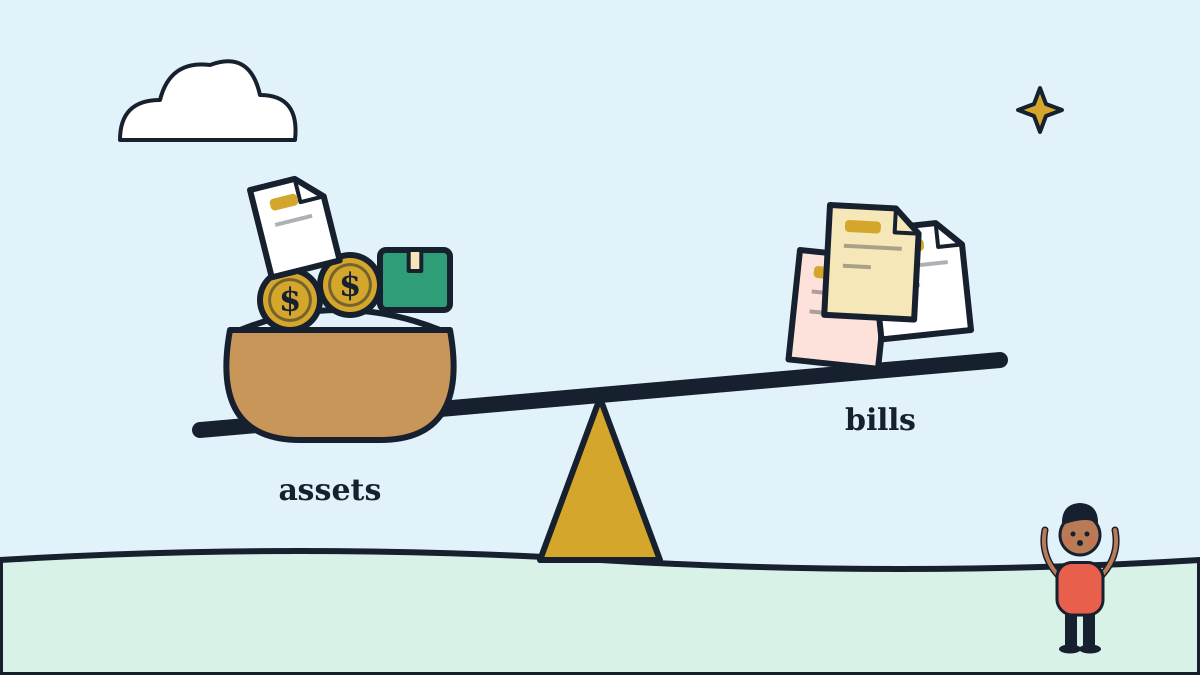
What Is Working Capital? The Formula, Explained With a Real-Looking Example
The formula, what counts on each side, and a worked example from a small homewares shop.
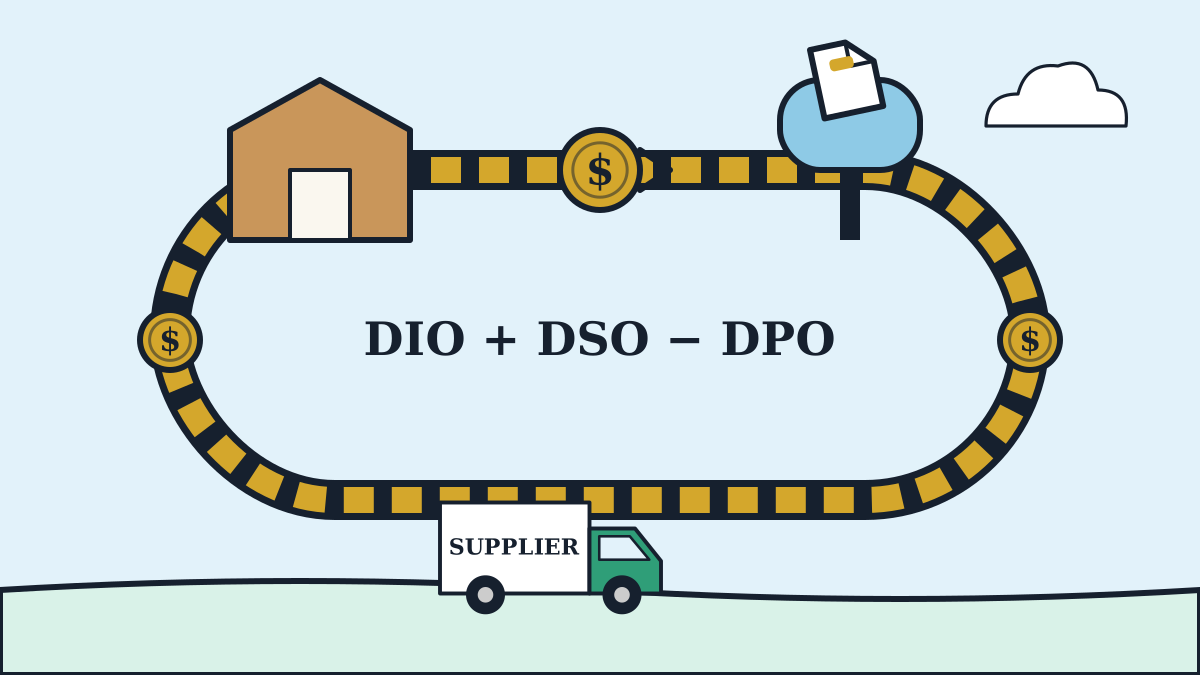
The Cash Conversion Cycle: How Many Days Your Money Is Stuck
DIO + DSO − DPO: a worked example, a mini calculator, and what shaving ten days is worth.
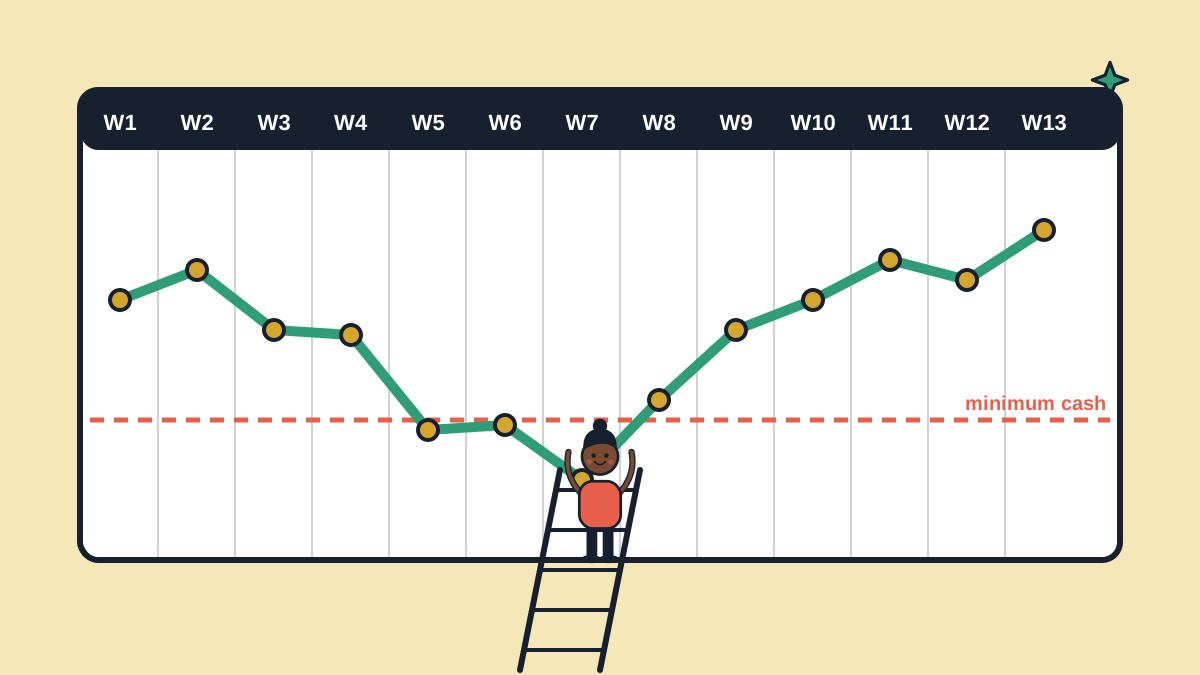
How to Build a 13-Week Cash Flow Forecast (Step by Step)
A week-by-week spreadsheet method, a worked example, and a 30-minute weekly routine.