
What Is Working Capital? The Formula, Explained With a Real-Looking Example
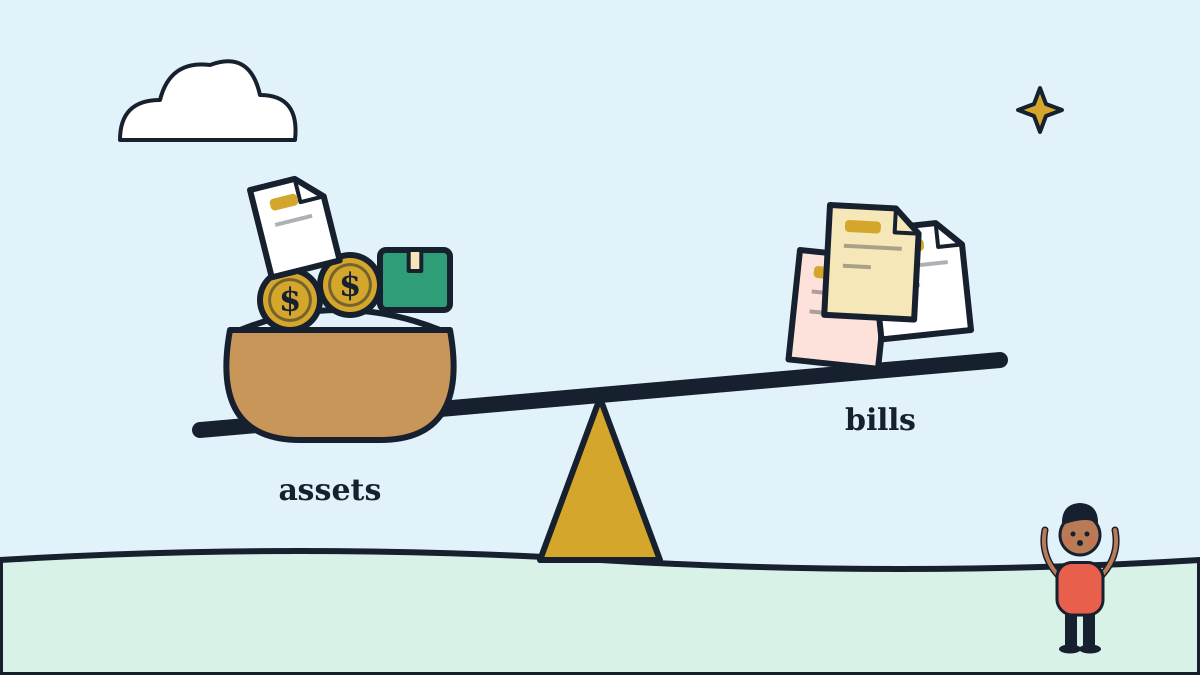
Working capital is the money a business has available to run its day-to-day operations once it has set aside what it owes in the near term. It is the difference between the resources that will turn into cash within about a year and the bills that must be paid within about a year.
That sounds abstract, so this guide builds the number from scratch for a small, made-up homewares shop. By the end you should be able to pull the right lines off your own balance sheet, calculate working capital in a couple of minutes, and, more importantly, know what the result is telling you.
The working capital formula
Working capital = Current assets − Current liabilities
Both terms come straight from the balance sheet. "Current" is accounting shorthand for "expected to be used up, collected or paid within twelve months", or within one normal operating cycle if a business has a cycle longer than a year (a winery ageing stock, for example). Anything longer-lived, such as equipment, buildings, or the part of a loan due in three years, sits in the non-current sections and is left out.
A positive result means the business has more short-term resources than short-term obligations. A negative result means the opposite. Neither is automatically good or bad, which we come back to below, but the sign and the size give you a first read on how much breathing room there is.
What counts as a current asset or liability?
Most small-business balance sheets group these lines for you. If yours does not, these are the usual suspects:
| Current assets (turn into cash within ~12 months) | Current liabilities (due within ~12 months) |
|---|---|
| Cash in bank accounts and on hand | Accounts payable (supplier bills) |
| Accounts receivable (invoices customers owe you) | Credit card balances |
| Inventory: raw materials, work in progress, finished goods | Amounts drawn on a line of credit or overdraft |
| Prepaid expenses (rent or insurance paid in advance) | The portion of long-term loans due in the next 12 months |
| Short-term investments you could sell quickly | Accrued wages, payroll taxes and sales tax collected |
| Other receivables (a refund due, a deposit coming back) | Customer deposits and deferred revenue |
Two lines trip people up. First, only the next twelve months of loan repayments count as current, even though the whole loan is a debt. Second, customer deposits are a liability: you have the cash, but you still owe the customer the product or service.
A worked example: Maple & Twine homewares
Maple & Twine is an imaginary two-person shop that sells candles, textiles and kitchenware in store and to a handful of cafés on 30-day invoices. At the end of its financial year its balance sheet shows:
| Current assets | Amount | Current liabilities | Amount |
|---|---|---|---|
| Cash | $18,000 | Accounts payable | $22,000 |
| Accounts receivable | $12,000 | Credit card | $4,000 |
| Inventory | $40,000 | Loan repayments due this year | $6,000 |
| Prepaid insurance | $2,000 | Accrued wages and sales tax | $8,000 |
| Total | $72,000 | Total | $40,000 |
Working capital is $72,000 minus $40,000, or $32,000. On paper, the shop has $32,000 more coming in over the next year from its existing short-term resources than it has going out to settle existing short-term bills.
Now look at the mix. More than half of the current assets ($40,000) is inventory. Candles and tea towels are not cash; they only become cash when someone buys them, and seasonal lines may need discounting first. If you strip inventory and the prepaid insurance out, the shop has $30,000 of cash and receivables against $40,000 of bills. That is why analysts rarely stop at the headline figure and move on to ratios such as the current ratio and quick ratio.
Gross, net and operating working capital
You will see a few variations of the term, and it helps to know which one someone means:
- Gross working capital is simply total current assets ($72,000 in the example). It is an older usage and not very informative on its own.
- Net working capital is current assets minus current liabilities. When people say "working capital" without a qualifier, this is almost always what they mean.
- Operating working capital (sometimes called non-cash working capital) strips out cash and interest-bearing debt to focus on the trading cycle: receivables plus inventory minus payables. For Maple & Twine that is $12,000 + $40,000 − $22,000 = $30,000. This version is popular in valuations and in business sale negotiations because it isolates the cash that is tied up simply by trading.
What the number can and cannot tell you
Working capital is a snapshot. It captures one day, usually a month-end or year-end, and businesses can look quite different a few weeks later. A retailer measured on 31 December, straight after the holidays, will show a lot of cash and little stock; the same shop in October will show the reverse.
It also treats every dollar of current assets as equal. A receivable from a reliable customer due next week and one that is 150 days overdue both count in full. Stock that sells every week and stock that has not moved since last spring both count at cost. Before relying on the figure, ask two quality questions: how much of the receivables would you genuinely expect to collect, and how much of the inventory would sell at close to its book value?
Finally, it says nothing about timing within the year. A business with healthy working capital can still hit a cash crunch in a particular week if a large supplier bill lands before customer payments arrive. That is why many owners pair it with a short-range 13-week cash flow forecast.
A quick routine for checking your own
- Pull the latest balance sheet from your accounting software and make sure the month has been fully reconciled.
- Add up current assets and current liabilities, and confirm the current portion of any loans is split out.
- Subtract to get working capital, then note how much of the assets are inventory and receivables.
- Look at the receivables aging report and discount anything very overdue in your head.
- Repeat monthly and watch the trend rather than any single reading.
Frequently asked questions
Is working capital the same as cash?
No. Cash is one part of current assets. Working capital also includes receivables, inventory and prepaid items, and it subtracts everything you owe in the short term. A business can have plenty of cash and weak working capital if big bills are coming due, or little cash and strong working capital if lots of money is tied up in stock and invoices.
What is a good amount of working capital?
There is no universal figure because it depends on the size of the business and how its cash cycle works. Comparing it to sales, or looking at the current ratio, gives a better sense of scale than the raw dollar amount. Trend over time is often more telling than any benchmark.
Does profit increase working capital?
Usually, yes, because profit that is retained in the business ends up as cash, receivables or inventory. But paying down long-term debt, buying equipment or paying owners out of that profit moves money out of current assets, so profitable businesses do not always see working capital rise.
Can working capital be negative?
Yes. Some business models, such as cafés and subscription services that are paid before they pay suppliers, run with negative working capital by design. For others it can be a warning sign. Our guide to negative working capital explains how to tell the difference.
Related articles
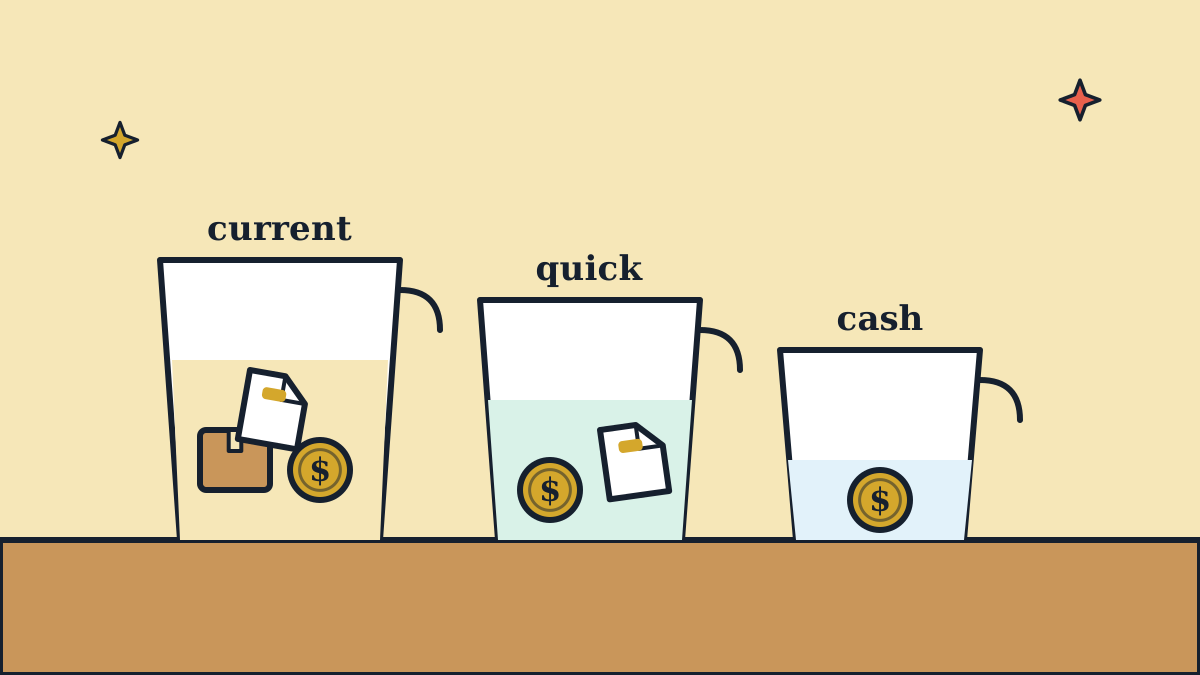
Current Ratio vs Quick Ratio: Which Liquidity Test Matters for a Small Business?
Three liquidity ratios, what each one tests, and why a 2:1 rule of thumb needs context.
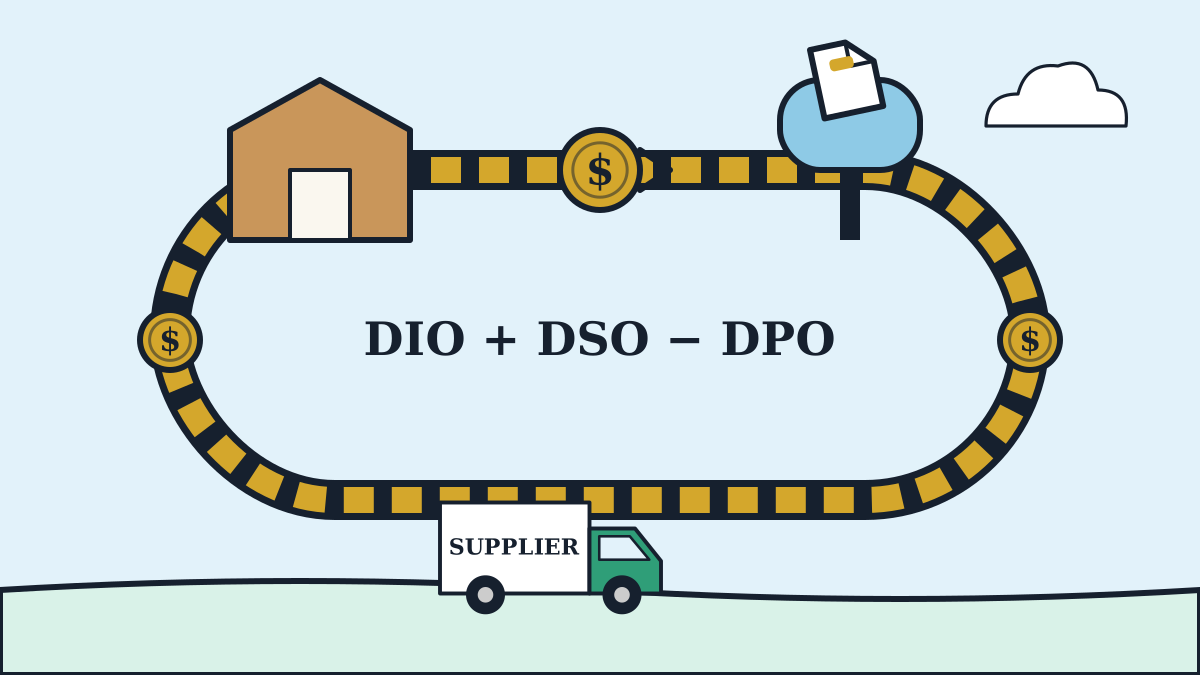
The Cash Conversion Cycle: How Many Days Your Money Is Stuck
DIO + DSO − DPO: a worked example, a mini calculator, and what shaving ten days is worth.
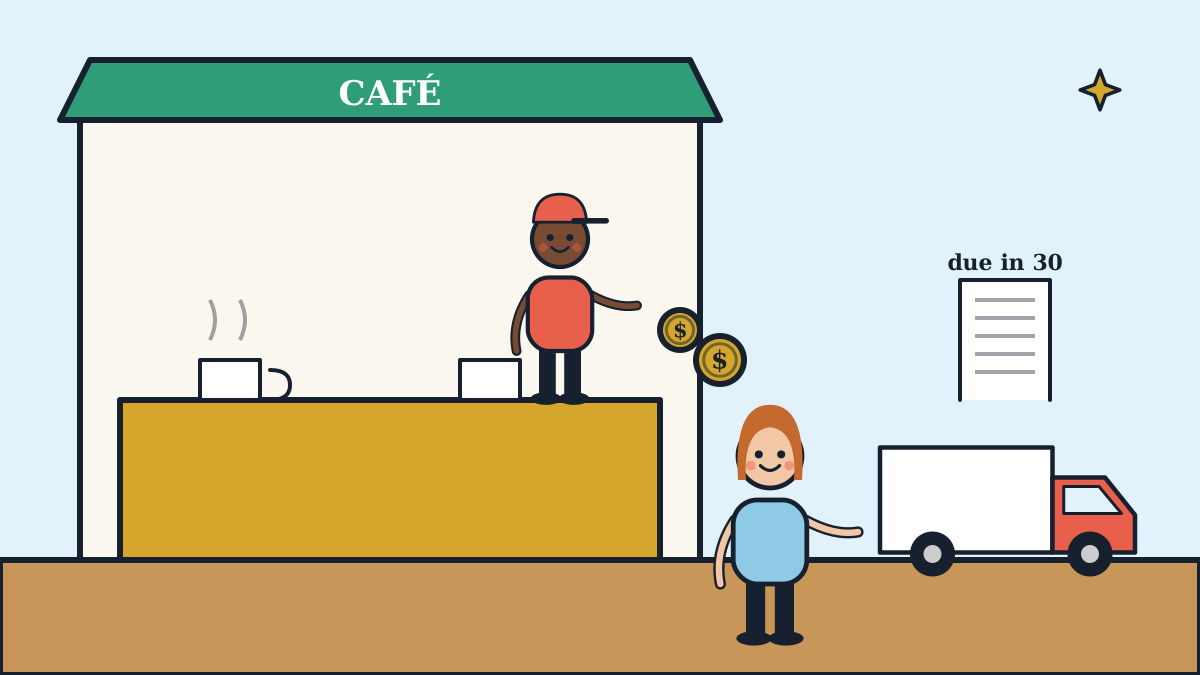
Negative Working Capital: Clever Business Model or Warning Sign?
Why some cafés and subscription businesses run negative on purpose, and the signs that it is trouble.