
Home / Articles / The cash cycle
The cash cycleSupplier Payment Terms Decoded: Net 30, 2/10 Net 30 and When to Pay Early
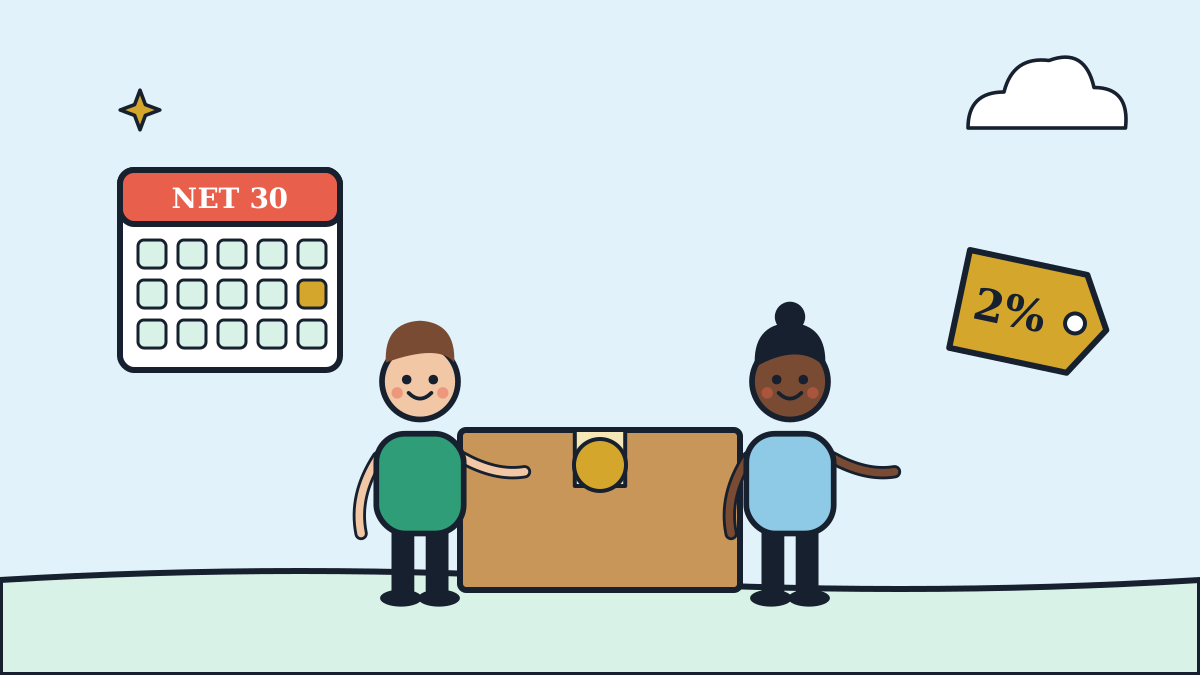
Trade credit, the time suppliers give you to pay, is the most common form of business financing and usually the cheapest. It rarely feels like financing because no one calls it a loan, but a supplier who delivers goods today and asks to be paid in 30 days is funding your working capital for a month.
Understanding the terms on your invoices, and the real value of any discount for paying early, is one of the easiest ways to manage cash better.
Common terms and what they mean
| Term | Meaning |
|---|---|
| Net 30 (or Net 14, Net 60) | Full amount due 30 days after the invoice date. |
| 2/10 Net 30 | Take 2% off if you pay within 10 days; otherwise the full amount is due in 30 days. |
| EOM (end of month) | The payment clock starts at the end of the month the invoice is dated. "Net 30 EOM" on a 5 March invoice means due around 30 April. |
| COD (cash on delivery) | Pay when the goods arrive. |
| CIA / CWO (cash in advance / cash with order) | Pay before the goods are shipped. Common for new customers. |
| Dating (seasonal dating) | Goods delivered before a season with payment deferred until sales begin. Sometimes offered by suppliers in seasonal industries. |
Always check whether the clock runs from the invoice date, the delivery date or the month end. On a large order, the difference can be several weeks.
The hidden interest rate in an early-payment discount
"2/10 Net 30" sounds like a small incentive. It is actually a very generous offer, or, seen the other way round, a very expensive loan if you do not take it.
If you skip the discount you keep your money for an extra 20 days (from day 10 to day 30), and the price of doing so is 2% of the invoice. You are effectively borrowing 98 cents for 20 days at a cost of 2 cents. Annualised:
Annualised cost ≈ Discount ÷ (100% − Discount) × 365 ÷ (Full term − Discount period)
For 2/10 Net 30: 2 ÷ 98 × 365 ÷ 20 ≈ 37% a year (simple, not compounded).
| Terms | Extra days you keep the cash | Approx. annualised cost |
|---|---|---|
| 1/10 Net 30 | 20 | ~18% |
| 2/10 Net 30 | 20 | ~37% |
| 2/10 Net 60 | 50 | ~15% |
| 3/10 Net 30 | 20 | ~56% |
The decision rule follows directly. If you have spare cash, or can borrow for less than the annualised figure (for example on a line of credit at a lower rate), taking the discount is usually a good deal. If paying early would leave you short and force you onto expensive financing, it may not be. Either way, if you are not taking the discount, pay on the due date, not before: paying on day 12 gives up the discount and the float.
Using terms to shape your cash cycle
Days payables outstanding (DPO) is the part of the cash conversion cycle that works in your favour. The longer your suppliers' terms relative to your customers', the less of your own money is tied up. Some practical ways to improve the balance:
- Line up terms with your sales cycle. If your customers pay in 30 days, suppliers on 14-day terms mean you are funding the gap. Ask whether 30 is possible.
- Consolidate orders. Bigger, less frequent orders with one supplier can earn better terms, but watch that you are not simply creating excess inventory.
- Schedule payment runs. Paying once or twice a week, on or just before due dates, avoids both early payments and accidental late ones.
- Ask about seasonal dating if your business is seasonal and your supplier's industry offers it.
Negotiating better terms
Suppliers extend credit to customers they trust. The strongest negotiating position is a record of paying on time.
- Pay reliably for a few months, then ask. Mention your payment record specifically.
- Time the conversation around a larger order, a renewal or an annual review.
- Offer something in return: a longer commitment, forecasts of your orders, or faster payment on some items.
- Be specific: "Could we move from Net 14 to Net 30 starting next quarter?" is easier to say yes to than "better terms".
- Get any change confirmed in writing and make sure it appears on future invoices.
The line you should not cross
"Stretching" payables, paying later than agreed without asking, can look like free money. It is not. Late payments can trigger fees and interest under the supplier's terms, get you moved to cash-in-advance, lower your priority when stock is short, and in some cases show up on business credit reports that other suppliers and lenders check. It also passes your cash problem onto another small business. If you genuinely cannot pay on time, call the supplier before the due date and agree a plan. Most would much rather have a conversation than a surprise.
Frequently asked questions
Is trade credit really a form of financing?
Yes. It shows up as accounts payable, a current liability, and it funds inventory or services you have received but not yet paid for. It is usually interest-free if paid on time, which makes it the cheapest short-term funding most businesses have.
Should I always take an early-payment discount?
Not always. It is usually worthwhile if you have the cash and no cheaper use for it. If taking it would leave you short and force you to borrow at a higher rate, holding the cash can be the better choice.
How do I get trade credit as a new business?
Expect to start on cash in advance or short terms. Provide trade references, pay promptly, and ask for terms to be reviewed after a few months of reliable orders.
Related articles
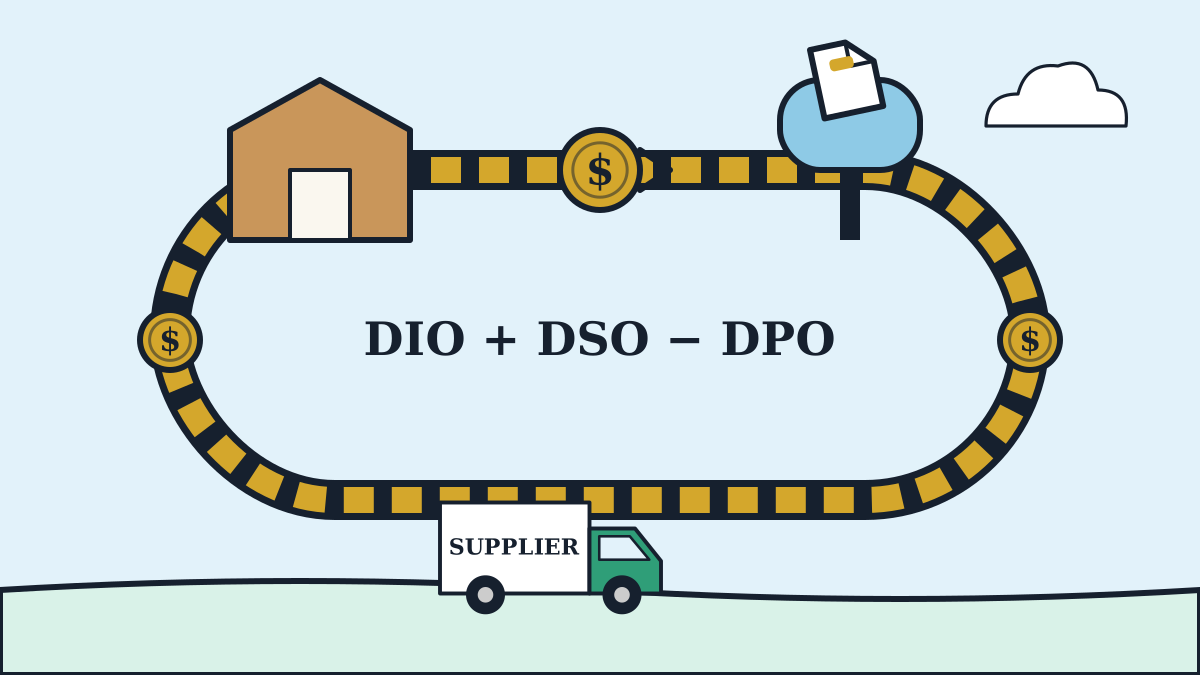
The Cash Conversion Cycle: How Many Days Your Money Is Stuck
DIO + DSO − DPO: a worked example, a mini calculator, and what shaving ten days is worth.
How to Get Paid Faster: A Practical Accounts Receivable Playbook
Invoicing habits, an aging report walkthrough, and a follow-up schedule that stays friendly.
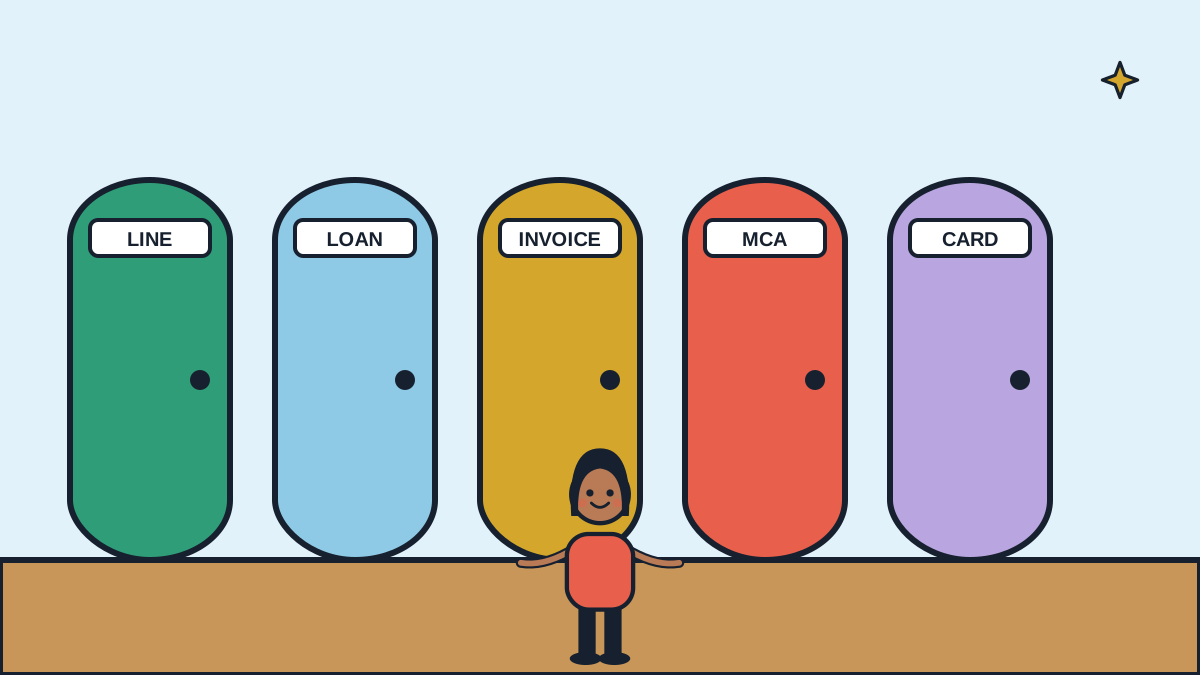
Working Capital Financing Options Compared: Lines of Credit, Factoring, MCAs and More
How each option works, what it suits, and the catches to check before you sign.