
The Working Capital Peg: What Happens to Working Capital When You Sell a Business

Owners selling a business usually focus on the headline price. But in most small and mid-sized deals there is a second number that can move the final cheque by tens of thousands of dollars: the working capital target, often called the peg. Understanding it early helps you avoid surprises at the closing table.
This is a general explanation, not deal advice. Sale agreements are negotiated documents, and you should work with an accountant and a lawyer experienced in business sales.
Why buyers care about working capital
A buyer valuing a business is paying for its ability to keep trading and producing profit. To do that on day one, the business needs a normal amount of stock on the shelves, a normal book of customer invoices waiting to be collected, and normal supplier bills waiting to be paid. In other words, it needs a normal level of working capital.
If a seller ran stock right down, collected every invoice aggressively and delayed paying suppliers in the months before closing, they could pull extra cash out of the business, and the buyer would have to put that cash straight back in to restore normal operations. The peg exists to prevent that, and equally to protect the seller if they deliver more working capital than normal.
How the peg and the true-up work
Many small-business deals are priced on a "cash-free, debt-free" basis: the seller keeps the cash and pays off the debt, and the buyer receives the operating business with a normal level of working capital. The mechanism has three parts:
- Define working capital. The agreement sets out exactly which balance sheet lines count. Usually this is operating working capital: receivables, inventory and prepaid expenses, minus payables and accrued expenses, with cash and interest-bearing debt excluded because they are dealt with separately.
- Set the peg. The parties agree a target level, commonly based on an average of recent month-end balances, often the trailing twelve months, which smooths out seasonal swings.
- True up after closing. Shortly after the deal closes, the actual working capital delivered is measured using the agreed definition. If it is below the peg, the price is typically reduced by the shortfall; if above, the price is typically increased. Many agreements include a small tolerance band, sometimes called a collar, within which no adjustment is made.
| Item | Amount |
|---|---|
| Agreed headline price (cash-free, debt-free) | $900,000 |
| Working capital peg (12-month average) | $150,000 |
| Working capital actually delivered at closing | $130,000 |
| Shortfall | −$20,000 |
| Adjusted price before debt payoff and other adjustments | $880,000 |
A $20,000 difference on a $900,000 deal is more than 2% of the price, often more than the seller spent on advisers. That is why the details repay attention.
Where disputes usually start
The definition
Should customer deposits count as a liability? Is a large one-off receivable, such as an insurance claim, part of normal trading? Should obsolete stock be written down before measuring? Small definitional choices can move the figure significantly. Agreeing a sample calculation, built from actual historical balances, alongside the wording reduces later arguments.
Seasonality
A trailing twelve-month average may not reflect the month the deal actually closes. A garden centre closing in March will naturally hold more stock and fewer receivables than its annual average suggests; see seasonal cash flow. Some deals use a month-specific peg or adjust for the closing date.
Accounting consistency
The peg is calculated from past accounts; the true-up uses the closing balance sheet. If accounting methods differ between the two, such as a new bad-debt provision or a change in how inventory is costed, the comparison becomes unfair. Agreements commonly require the same policies to be applied throughout.
Quality of the assets
Buyers will look closely at old receivables and slow stock. A seller who has let invoices age or stock pile up may find those items excluded or written down, as covered in our guides to receivables and inventory.
Preparing as a seller
- Get monthly balance sheets reconciled and consistent for at least the past 12 to 24 months.
- Calculate your own operating working capital each month so you know your normal range before the buyer tells you.
- Clear out or write down obsolete stock and collect or provide for very old receivables well before a sale.
- Keep paying suppliers and collecting from customers normally in the run-up to closing; unusual moves will be spotted.
- Ask your advisers to model the peg under different definitions and closing dates.
- Make sure the agreement includes a worked example and a clear dispute process.
Frequently asked questions
Is the peg negotiable?
Yes. The level, the definition, the averaging period and any tolerance band are all negotiated. Buyers and sellers each tend to favour choices that help their side, which is why good advisers matter.
Does the peg apply to asset sales as well as share sales?
It can. In many small asset deals the buyer takes specified inventory and sometimes receivables, and the agreement deals with them directly. The concept of delivering a normal level of working capital still applies, even if the mechanism differs.
When is the true-up paid?
Agreements commonly allow a period after closing for the buyer to prepare the closing statement and for the seller to review it, and a portion of the price is sometimes held back in escrow to cover adjustments. Timings vary by deal.
Related articles

What Is Working Capital? The Formula, Explained With a Real-Looking Example
The formula, what counts on each side, and a worked example from a small homewares shop.

Seasonal Cash Flow: How to Survive the Slow Months and Fund the Busy Ones
A month-by-month example that finds the cash trough, plus ways to fund the stock build.
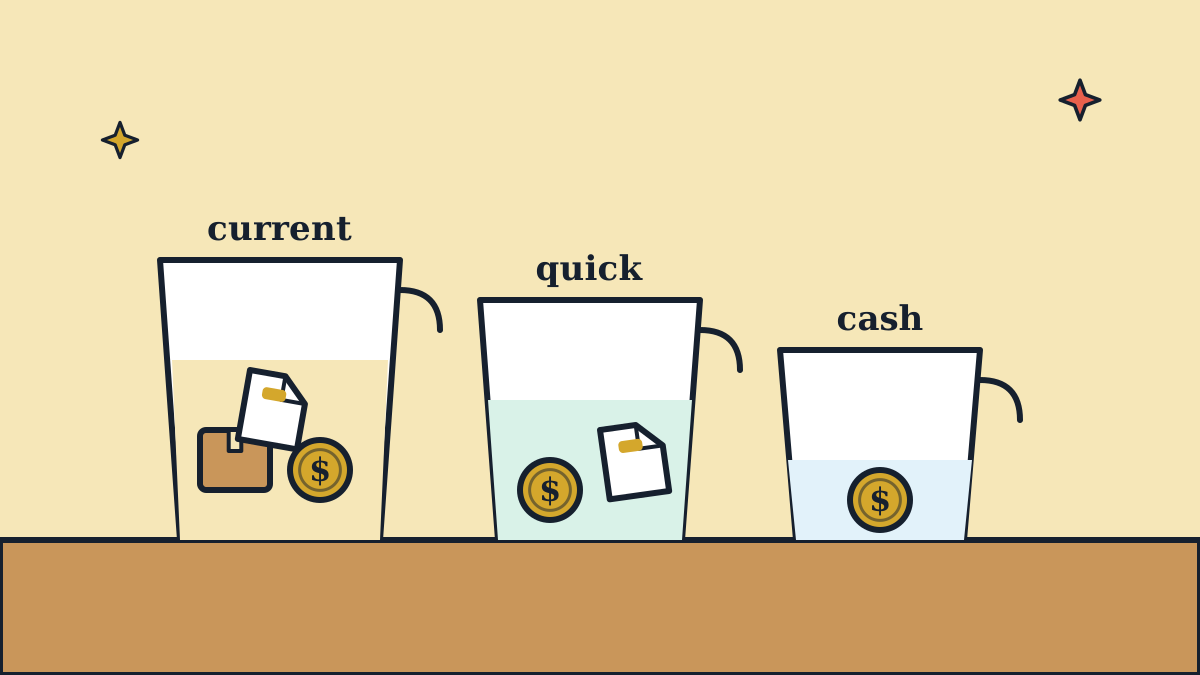
Current Ratio vs Quick Ratio: Which Liquidity Test Matters for a Small Business?
Three liquidity ratios, what each one tests, and why a 2:1 rule of thumb needs context.