
Why Growth Eats Cash: Profitable, Growing and Still Running Out of Money
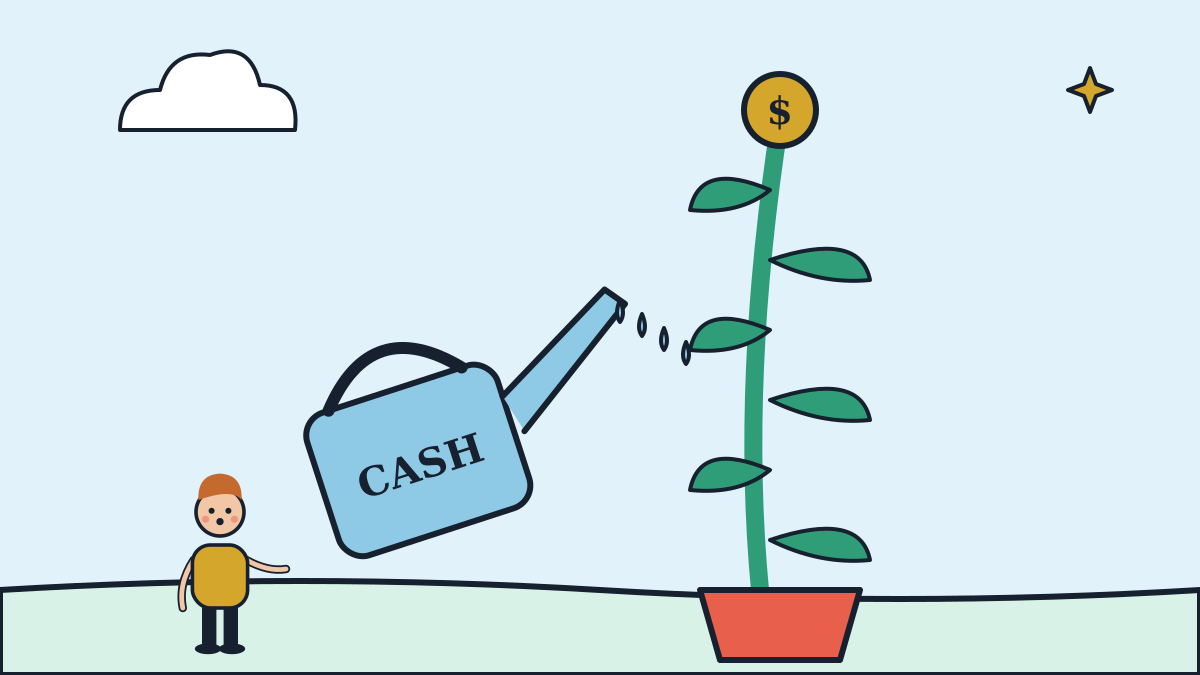
It is one of the most counterintuitive facts in business: a company can win more customers, grow sales fast, make a healthy profit on every order, and still run out of money. It happens often enough that accountants have a name for it: overtrading.
The cause is working capital. This guide shows exactly how growth absorbs cash, so you can see the squeeze coming and plan for it.
Why more sales need more cash
For most businesses that buy stock or sell on credit, every dollar of annual sales requires some amount of cash to be tied up at any given moment: in inventory waiting to be sold, and in invoices waiting to be paid, minus what suppliers are funding through their payment terms. That is operating working capital, described in our working capital basics.
If that amount is, say, a quarter of annual sales, then a business doing $800,000 a year has around $200,000 tied up in the trading cycle. Grow to $1.2 million and, all else being equal, around $300,000 is tied up. The extra $100,000 has to come from somewhere, and it is needed before the extra sales turn into cash.
A worked example: a growing wholesaler
An illustrative kitchenware wholesaler sells to independent shops. Its cash conversion cycle means operating working capital runs at roughly 25% of annual sales. It earns a net profit margin of 8%. A new regional contract lifts sales by 50% in a single year.
| Item | Year 1 | Year 2 |
|---|---|---|
| Sales | $800,000 | $1,200,000 |
| Net profit at 8% | $64,000 | $96,000 |
| Operating working capital at 25% of sales | $200,000 | $300,000 |
| Extra cash absorbed by working capital | – | $100,000 |
| Profit left as cash after funding growth | −$4,000 |
The business had its best year ever and its cash went down, before paying any tax, loan principal or owner drawings. Every dollar of profit, and a bit more, was swallowed by extra stock and extra unpaid invoices. If the owner had also bought a second van or taken a larger salary on the strength of the profit, the bank account would be deeply negative.
This is a simplified model; real businesses do not scale perfectly, and some costs grow more slowly than sales. But the direction is right, and the faster the growth, the sharper the squeeze.
The warning signs of overtrading
- Sales and profit are rising, but the bank balance is flat or falling.
- The overdraft or credit line is used more heavily every month.
- You are paying suppliers later than you used to, or they are asking about it.
- You have to chase payroll money before each pay date.
- Your quick ratio is falling even though the business is growing.
- Large new customers have negotiated longer payment terms than your existing ones.
That last point matters. Winning a big customer often means accepting 60- or 90-day terms, which lengthens your DSO just as volume jumps, doubling the effect.
How to grow without a crunch
Measure your cash need per dollar of growth
Divide operating working capital by annual sales to get your own percentage. Multiply it by the extra sales you expect. That is roughly how much additional cash growth will absorb. Put it into your 13-week forecast and 12-month plan.
Shrink the percentage
Every day you take off the cash conversion cycle reduces the cash each new dollar of sales needs. Faster invoicing, deposits on large orders, leaner stock on slow lines and better supplier terms all help. The same improvement is worth far more during growth than during a stable year.
Negotiate the big contract carefully
Before accepting a large order, work out the cash it needs and when. Ask for a deposit, staged payments or shorter terms. If the customer insists on long terms, price that in, and arrange funding before you commit.
Match funding to the need
Growth in working capital is a longer-lasting need than a seasonal dip, because the extra receivables and stock stay as long as the higher sales do. That makes it better suited to a revolving line of credit sized to the new level, an asset-based facility, or retained profits and owner equity, than to very short-term, high-cost products. Our financing options guide compares them.
Hold back drawings and capital purchases
In a high-growth year, profit on paper is not spare cash. Delay large equipment purchases or finance them separately with a loan matched to the asset's life, and keep owner drawings modest until the cash catches up.
When slowing down is the right call
Sometimes the most financially sensible choice is to grow a little more slowly: turning down an order that would stretch you too far, or phasing a new contract in. It can feel like leaving money on the table, but a business that runs out of cash cannot finish the growth it started. Owners who understand their working capital needs can make that call with numbers rather than nerves.
Frequently asked questions
Does this apply to service businesses?
Yes, though usually less severely. Service firms have little inventory, but if they pay staff monthly and clients pay in 45 or 60 days, each new hire and project needs weeks of wages funded up front.
Is overtrading the same as being unprofitable?
No. An overtrading business is often profitable. The problem is timing: cash is committed to growth faster than profits arrive to replace it.
What about businesses that are paid up front?
Businesses with negative working capital, like subscriptions or cafés, can actually gain cash as they grow. See negative working capital for why.
Related articles
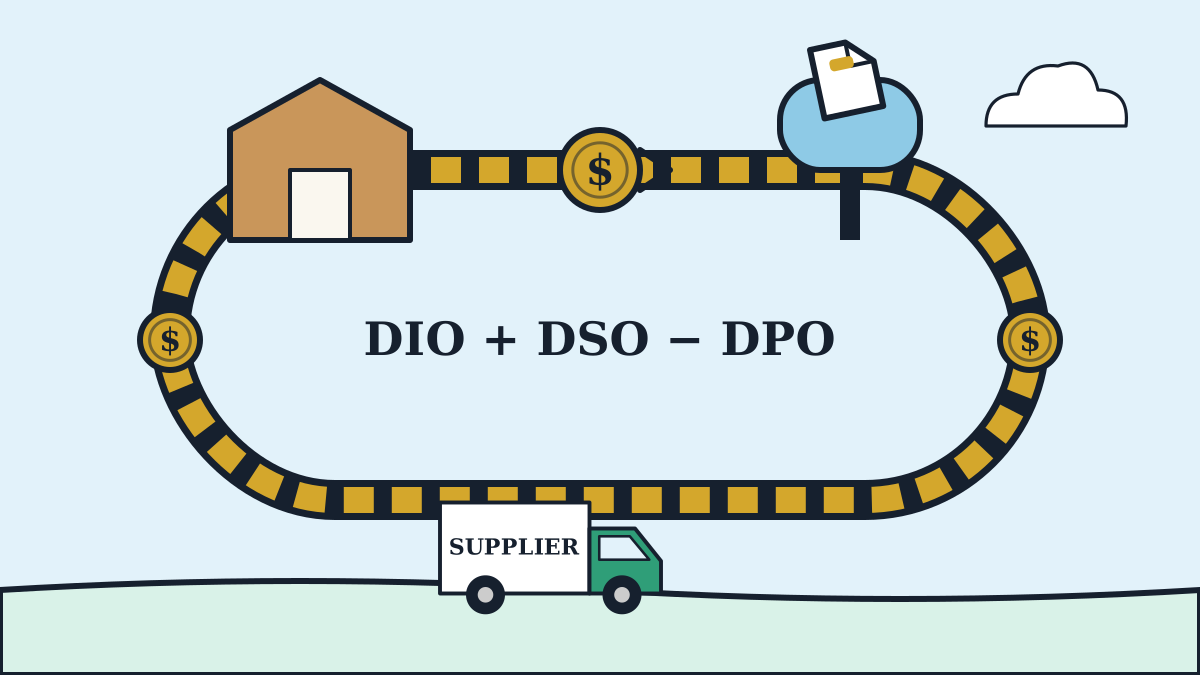
The Cash Conversion Cycle: How Many Days Your Money Is Stuck
DIO + DSO − DPO: a worked example, a mini calculator, and what shaving ten days is worth.
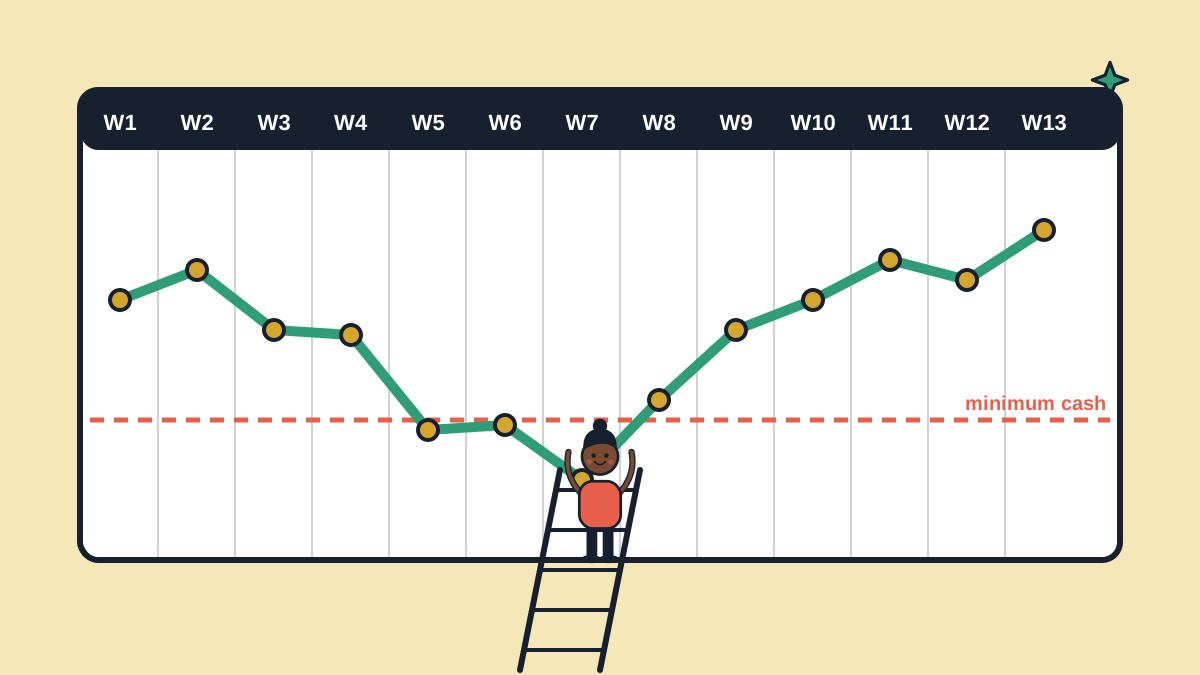
How to Build a 13-Week Cash Flow Forecast (Step by Step)
A week-by-week spreadsheet method, a worked example, and a 30-minute weekly routine.
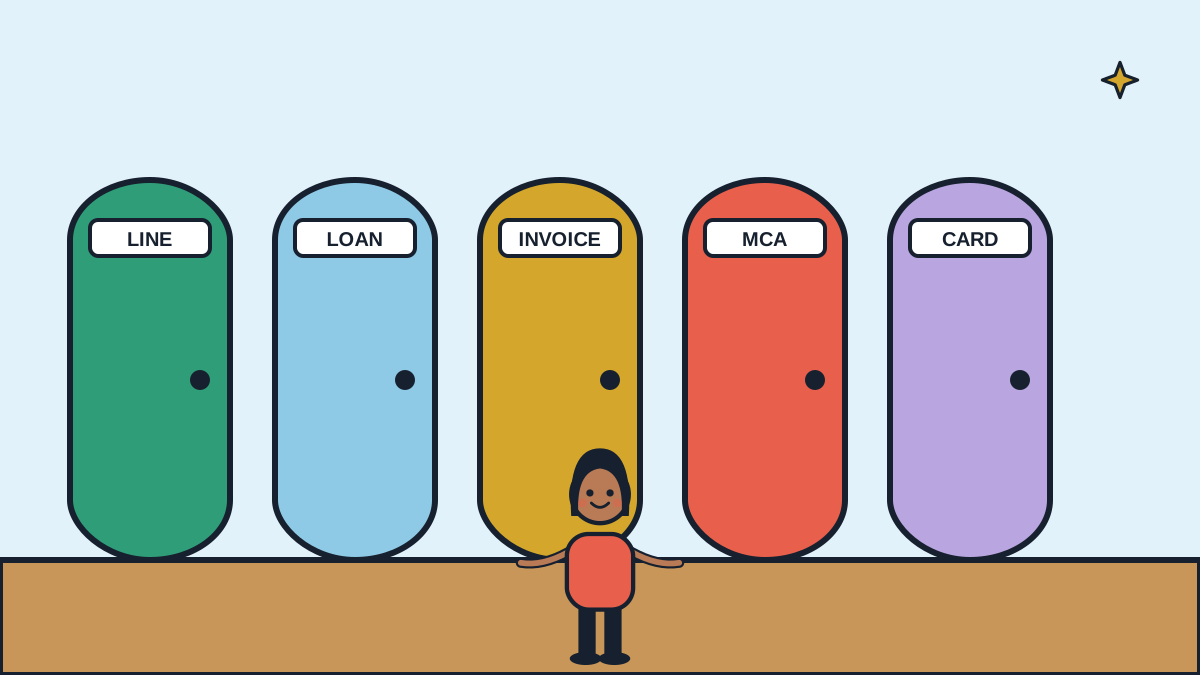
Working Capital Financing Options Compared: Lines of Credit, Factoring, MCAs and More
How each option works, what it suits, and the catches to check before you sign.